We're improving sea defences at Anchorsholme.

The Anchorsholme Coast Protection Scheme will protect over 5,000 properties from coastal flooding and erosion.

The council has been allocated £11m by the Environment Agency to construct rock groynes on the beach. A rock revetment will also be built to provide a long-term solution to movement and damage of the existing concrete defences.

For updates, keep checking this page or subscribe to our sea defences newsletter.

Latest updates

WhatsApp channel

We have launched a new WhatsApp channel where you can get the latest updates on the scheme. 

Join the Anchorsholme Coast Protection Scheme WhatsApp channel

Works start

The set-up of the construction compounds is complete, and the main works have begun. This has started with work to the seawall, including the addition of rock armour to the sloped revetment to strengthen and protect the existing structure. Work is also taking place to improve the beach access steps.

Beach access

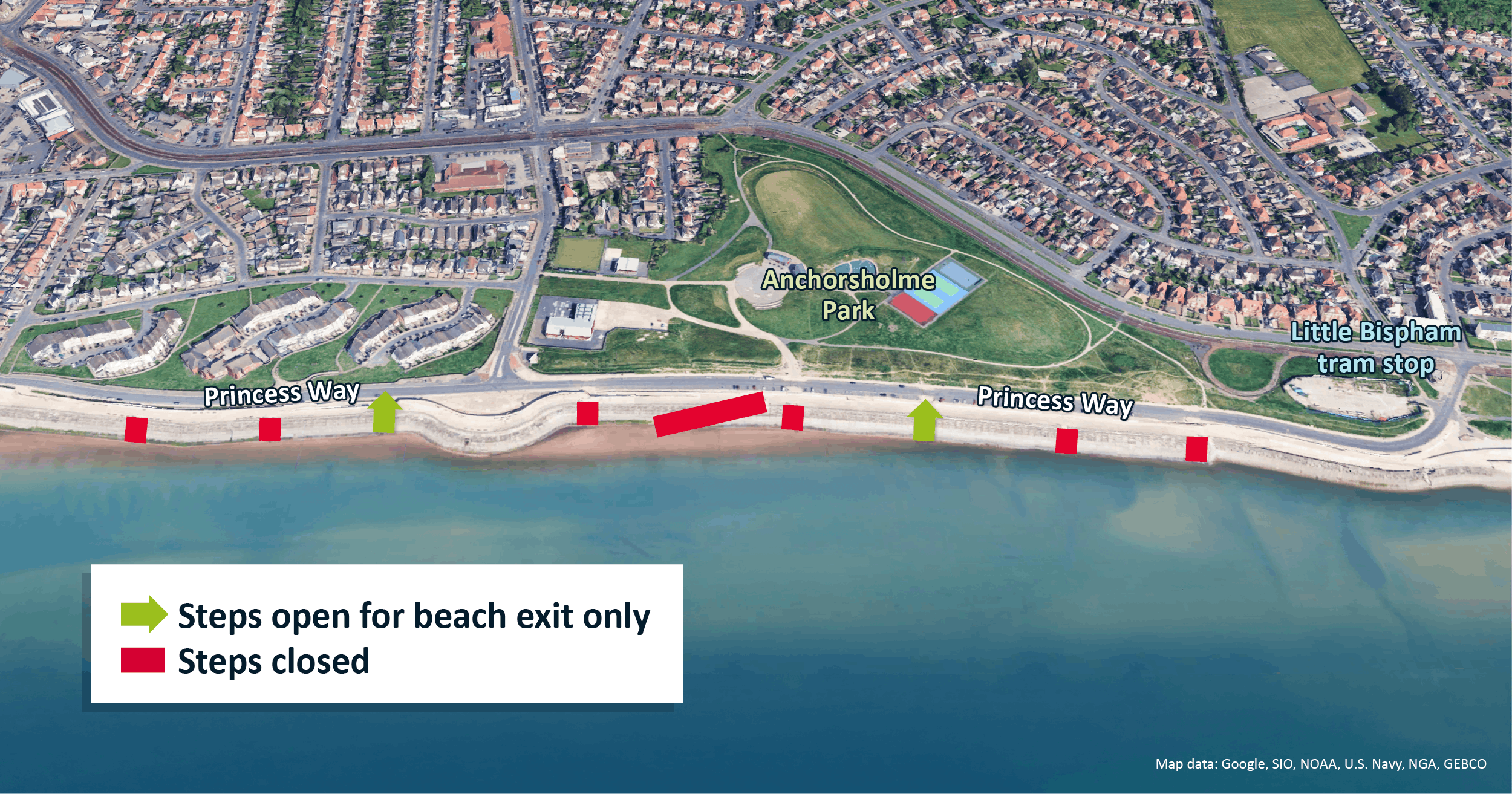
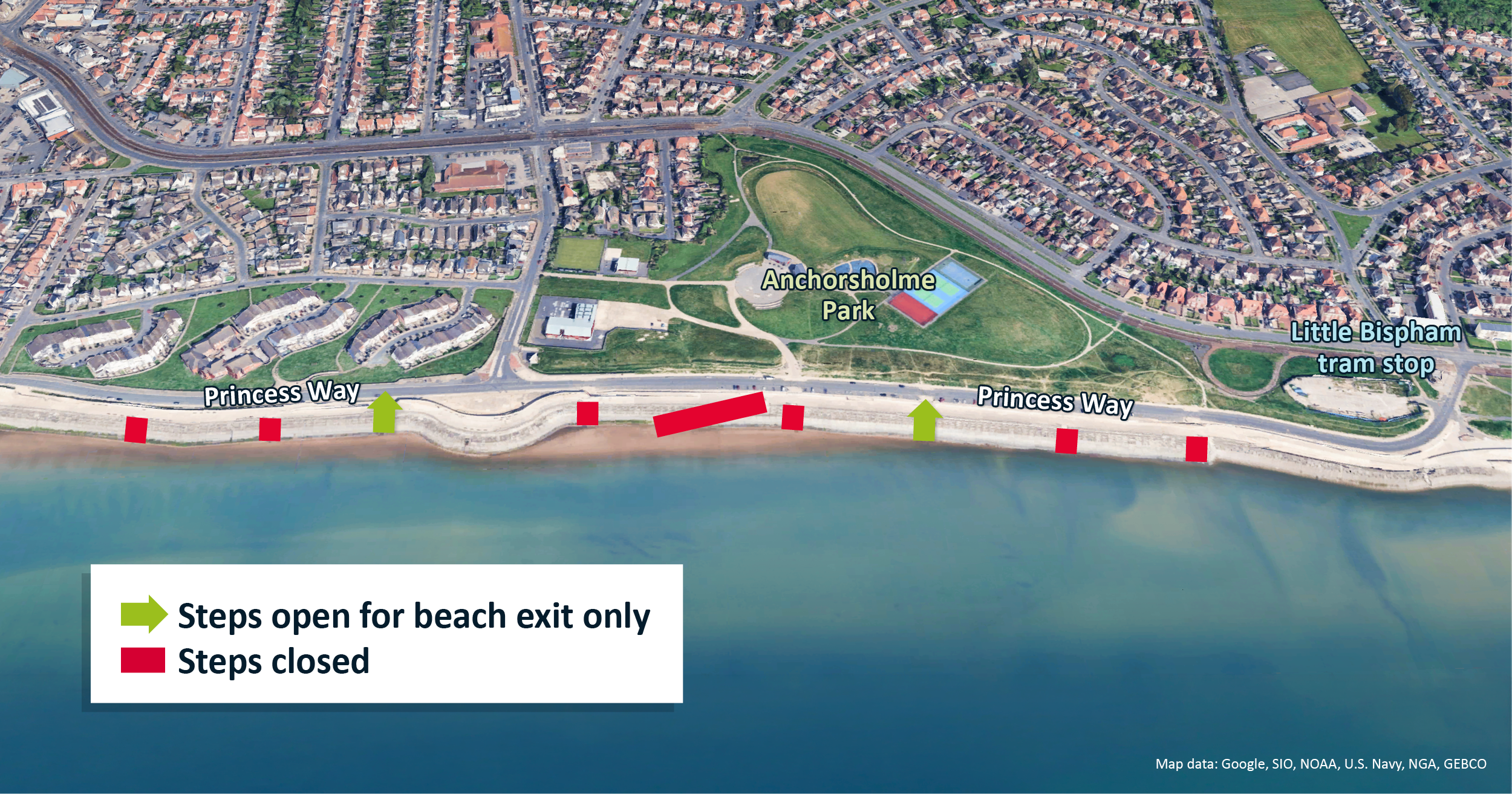
While the beach from Little Bispham to Kingsway remains open throughout the works, the access steps have temporarily closed to allow the construction of new steps and to keep beach users safe while heavy machinery is in operation. Some access steps will remain open to allow people to leave the beach in an emergency. 

During working hours (7.00am to 7.00pm, Monday to Friday), the beach is a busy site with large equipment in operation and rocks temporarily stored before final placement. For safety, the public are asked to stay clear of the designated working area.

The working area is established at the start of each day and clearly marked with red and white chains. When work is taking place, marshals will be on site to help members of the public move around the area safely.


ACPS Works 1 (Image credit Balfour Beatty)
Anchorsholme revetment works (image credit: Balfour Beatty)
ACPS Works 3 (Image credit Balfour Beatty)
Anchorsholme revetment works (image credit: Balfour Beatty)
ACPS Works 2 (Image credit Balfour Beatty)
Anchorsholme revetment works (image credit: Balfour Beatty)

The work

Rock groynes

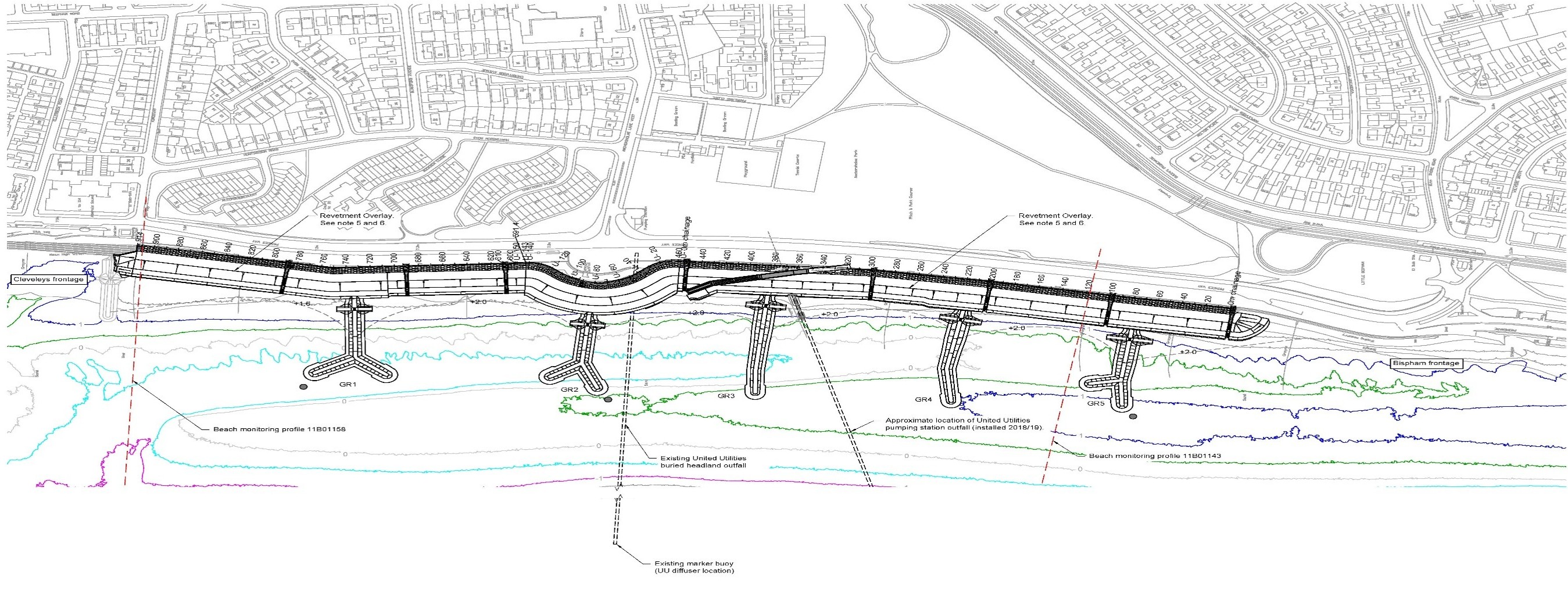
Five rock groynes will be built on the beach in a mixture of Y and crank shapes. They will be 90 to 120 metres long and installed on the beach between Kingsway and Little Bispham tram stop.  

Rock groynes are structures that extend out from the beach into the sea. Made from large boulders, they create a series of small headlands on the beach by trapping sand and shingle.

This raises the beach level, creating a stronger and more stable beach. In turn, this improves flood protection because the beach can better absorb wave energy, reducing the force of waves reaching the coast.

Crossover ramps

To allow access for authorised vehicles, crossover ramps will be built where each groyne meets the revetment.  

Rock revetment

A rock revetment will be built to provide a long‑term solution to movement and damage to the existing concrete defences. It will absorb wave energy more effectively than the current concrete slope, offering better flood protection.

The revetment work will be carried out by contractor Balfour Beatty at no cost to the council.

Access steps

Because the rock armour will increase the height of the revetment, the access steps to the beach need to be modified. The steps will be extended forward and upward to accommodate the new rock armour. 

Construction compounds

Two construction compounds have been established at the southern end of the scheme, near Little Bispham tram stop. They are used for rock storage, plant and vehicle storage, maintenance activities, site offices, welfare facilities and parking.


ACPS Visualisation (Image credit Balfour Beatty)
Anchorsholme Coast Protection Scheme visualisation (image credit: Balfour Beatty)
Layout of rock groynes planned for the beach at Anchorsholme
Layout of rock groynes

Why it's needed

Coastal erosion

A healthy beach is important for protecting people, properties and critical infrastructure from flooding and coastal erosion. While beach levels naturally rise and fall, there has been a long-term trend of sand loss at Anchorsholme and along the whole of Blackpool's coastline.

Beach levels along Blackpool's central coastline have lowered by a total of 1.7 metres since 1986. In Anchorsholme, beach lowering has become so severe that, at times, the muddy clay and cobble layer beneath the beach is exposed.

If the beach continues to erode, the sand that has been lost cannot naturally be replaced. This could have serious consequences, putting properties at greater risk from flooding. During storms, the beach absorbs wave impact before it hits the seawall. A lower beach means less of that impact is absorbed, increasing the risk of coastal flooding.

Rock groynes will help trap sand and raise beach levels. This will reduce the size and strength of waves reaching the seawall during storms, lowering the risk of flooding.

A more stable sandy beach will provide a better beach experience for residents and visitors. The boulders could also help create new habitats to support wildlife and boost biodiversity.

Rock groynes have worked well along the coast at Rossall and Cleveleys, where they have helped raise beach levels by trapping sand. Similar coast protection schemes are planned for other areas of Blackpool's coastline.

Strengthening existing sea defences

The coastal defences at Anchorsholme were completed in 2017. However, in one small area they have not performed as expected and the seawall has experienced movement and damage.

To fix this, rock armour will be added to the revetment. This will help stabilise the structure and protect it from further damage.

The rock armour will also help absorb wave energy, reducing the force of waves reaching the seawall and improving flood protection.


Aerial view of the Rossall Coastal Defence Scheme
Rock groynes at Rossall Beach where they have significantly raised the beach sand levels.
Image portraying beach lowering at Anchorsholme with clay underneath visible.
Beach lowering at Anchorsholme has at times caused the clay underneath to become exposed.

Access and safety

Blackpool Council is working closely with the contractors Balfour Beatty to minimise disruption and ensure public safety. Balfour Beatty is a member of the Considerate Constructors scheme, which requires high standards to be met and where possible exceeded.

Beach access and safety

While the beach from Little Bispham to Kingsway remains open throughout the works, the access steps have temporarily closed to allow the construction of new steps and to keep beach users safe while heavy machinery is in operation. Some access steps will remain open to allow people to leave the beach in an emergency.

During working hours (7.00am to 7.00pm, Monday to Friday), the beach is a busy site with large equipment in operation and rocks temporarily stored before final placement. For safety, the public are asked to stay clear of the designated working area.

The working area is established at the start of each day and marked with red and white chains. When work is taking place, marshals will be on the beach to help members of the public move around the area safely.  

Promenade access

Promenade access will remain open throughout the works. At times, heavy machinery will need to cross footpaths to access the beach. During these periods, pedestrian access may be temporarily paused and marshals will be on hand to manage this safely.

Travel and transport

No road closures are expected at this stage of construction. A section of Cycle Route 62 will close periodically, with diversions provided.

Working times

Normal working hours are Monday to Friday between 7.00am and 7.00pm.

Working times on the beach will vary depending on the tides.

Environmental Management Plan

A construction environmental management plan has been produced. This plan contains provisions to ensure that environmental concerns such as noise, vibration, dust and pollution risks are effectively managed.

Vibrations

The contractors continually monitor vibrations that could cause disruption to local residents.

Specialist monitoring equipment is placed on or near the working area to detect small vibrations. These are measured and recorded continuously.

Recorded vibration levels are compared against recognised safe limits. If vibrations exceed these limits, the monitoring equipment will trigger an alert to the site team. Works will then be paused while the cause is investigated.

If you have concerns about vibrations near the works, please contact:

Project timeline

The expected project timeline is as follows:

  • January 2026 – Construction compound installation
  • May 2026 – Start of revetment works
  • Spring 2027 – Start of rock groyne works
  • Summer 2027 - Completion of revetment works
  • Early 2028 – Completion of rock groyne works

Funding

The council has been allocated £11m by the Environment Agency for the construction of rock groynes on the beach.

The rock revetment will be delivered by contractors Balfour Beatty at no cost to the council, with an estimated value of around £20m.

The total value of the project is approximately £31m.

Consultation and planning

Consultation

In November 2024 the council launched a consultation into the scheme. Over 100 responses were received. These were considered before submitting the planning application.

Planning consent

The scheme's planning application has been approved.

You can view documents related to the planning submission on the online planning system. The application reference is 25/0053

Keep in touch

We’ll keep you informed via:

If you have any questions about the scheme, please email anchorsholme@blackpool.gov.uk 

Report an issue

To report an urgent issue with the works, please contact any of the following:

Public Liaison Officer

Jane, the scheme's public liaison officer, will be available in the information cabin at the site compound entrance on Thursdays from 9.00am to 12 noon. You can also contact her at jane@therabbitpatch.co.uk

Sea defences newsletter

To stay updated on the progress of the Anchorsholme Coast Protection Scheme, and our other sea defence projects, sign up to our sea defences newsletter.

WhatsApp channel

We have launched a new WhatsApp channel where you can get the latest updates on the scheme.

Join the Anchorsholme Coast Protection Scheme WhatsApp channel.