
On this page:
- Introduction to the scheme
- Parameter plans
- Better housing
- Public spaces
- Open space and greening
- Shops and community facilities
- Access and connectivity
- Your response and next steps
1. Introduction to the scheme
Blackpool Council’s long-term goal is to bring new life to central Blackpool through housing-led regeneration. This ambition is set out in both the council plan and the local plan.
The aim is to deliver the big changes needed to create modern, good-quality homes that meet the needs of 21st-century living - helping to build stronger communities and making Blackpool a better place for everyone.
Housing conditions and deprivation in Central Blackpool are among the worst in England. Because of this, the government has chosen Blackpool for a special programme to improve housing.
Why change is needed
Housing conditions in central Blackpool are some of the worst in England. Because of this, the government has chosen Blackpool for a special programme to improve housing.
Out of the £90.4 million of government funding, £54.5 million will be used to buy and clear up to 300 poor-quality properties. This will create space for new, modern, energy-efficient houses, with private gardens and improved streets. The aim is to give people more choice of good-quality homes and help fix long-standing problems in the local housing market.
What's being planned
- Demolition of around 300 poor-quality properties, funded by £54.5 million of government investment
- Getting approval to building up to 230 new, high-quality, energy-efficient homes to replace them
Blackpool Council is now asking for feedback on these plans which have been submitted as part of a formal planning application
Selecting the first phase boundary and the case for demolition
Blackpool Council has carefully studied the social, economic, and environmental challenges in central Blackpool to decide where to start the first phase of housing regeneration. The goal is to help fix the serious problems that have caused the local housing market to fail.
The study looked at things like:
- A large number of homes not meeting basic living standards
- Many homes with serious health risks (that could cause injury or even death)
- Lots of empty homes
- Overcrowded living conditions
- High numbers of people with no qualifications
- High levels of long-term unemployment
- Many residents not working or looking for work
- Poor quality streets and buildings (e.g. no trees, broken pavements)
- Not enough green space or private gardens
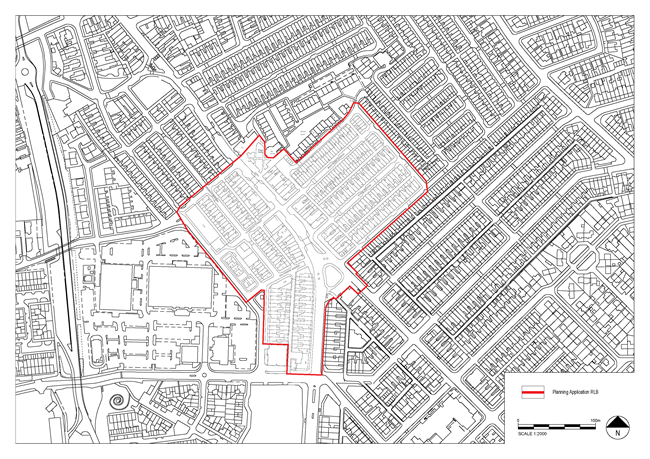
Because these problems are most severe in one particular part of central Blackpool, the council has chosen this area - shown by the red line on the phase 1 planning map - for the first stage of regeneration.
Here, £54.5 million of government funding will be used to buy and clear poor-quality homes and start building up to 230 new, modern, energy-efficient houses.
2. Parameter plans
What are we applying for?
We’re applying for planning permission to knock down poor-quality homes and replace them with new, high-quality housing, shops, green spaces, and other improvements.
The full description of the development is:
Hybrid planning application for initial housing transformation within the Blackpool Central Housing Regeneration Area, comprising a:
Full planning application
- Demolition of up to 300 existing buildings and structures on the site and removal of associatedexisting infrastructure
- Site clearance and preparation work
Outline planning application (with all matters reserved for future consideration)
- Up to 230 new dwellings (use class C3) with car and cycle parking
- Local centre uses comprising floorspace for flexible E use classes (including office, retail, leisure [including food and beverage]), F2 use classes (including halls, meeting places for local community)
- New public realm and hard and soft landscaped public open spaces
- Provision of associated infrastructure and highway works
What is a hybrid planning application?
A hybrid planning application applies for both full and outline planning permission in one planning application on the same site.
What is full application?
A full planning application is required when making detailed proposals for change in an area, such as for new development.
We know the exact properties that are being demolished so we are applying to knock them down under a full application.
What does an outline application mean?
Outline planning applications help check if a development idea is likely to be approved. This gives an early sense of whether the project can work in that area.
A second planning application known as reserved matters will be required in the future which will have full detailed design of the proposal. We will hold more consultation events in the future to talk to you about the detailed ideas and plans when they are ready.
What plans are you submitting with the planning application?
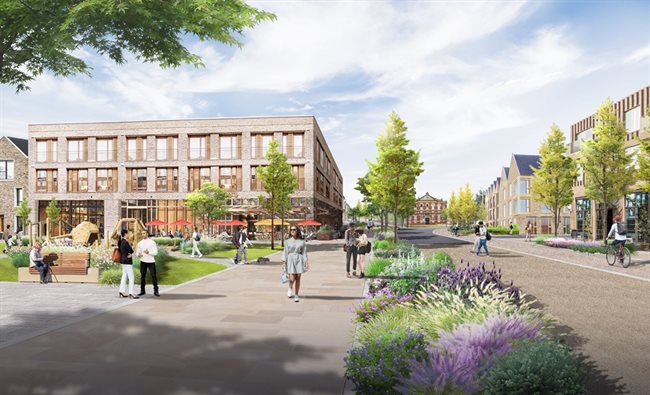
We will be submitting parameter plans with the planning application. These plans shown below set the basic ideas and limits for the proposed development. Our plans show:
- The tallest buildings allowed
- Where homes and shops will go
- Public open space
- Main routes through and into the site
These plans will guide future detailed design, as these parameters will be fixed through the granting of planning permission (the outline part of the hybrid application).

3. Better housing
Existing condition
Much of the housing within the Central Housing Regeneration Area is of poor quality, with very little garden or open space and challenges of high deprivation levels for many of the residents across the area, housing is split into 2 main types:
Terraces
- Lots of small, terraced homes with no front or back gardens
- Many houses look the same and are in poor condition
- Buildings need repairs and are structurally weak
Flats
- Many flats are overcrowded, with short-term renters making it hard to build a strong community
- Some landlords don’t take care of their properties properly
- Houses have been poorly converted into flats
- Low-quality extensions and changes, including turning homes into shops, have affected the area’s appearance
Proposed housing types
Terraced houses
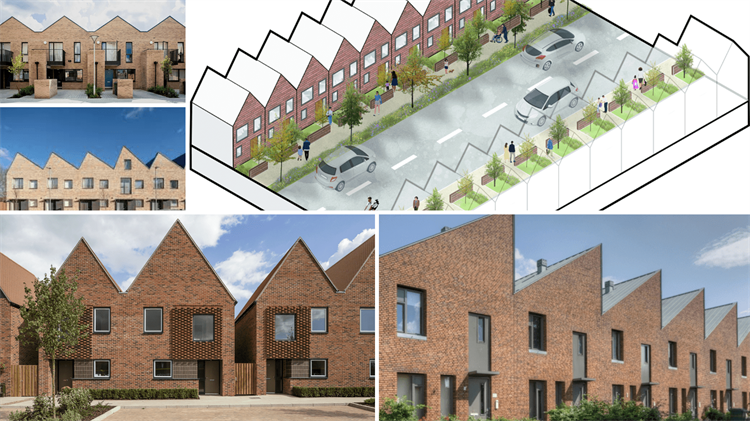
New, high-quality terraced homes will be built in a grid layout to reflect the area's history and character. These modern houses will include front and back gardens and be suitable for families and people of all ages.
Apartments
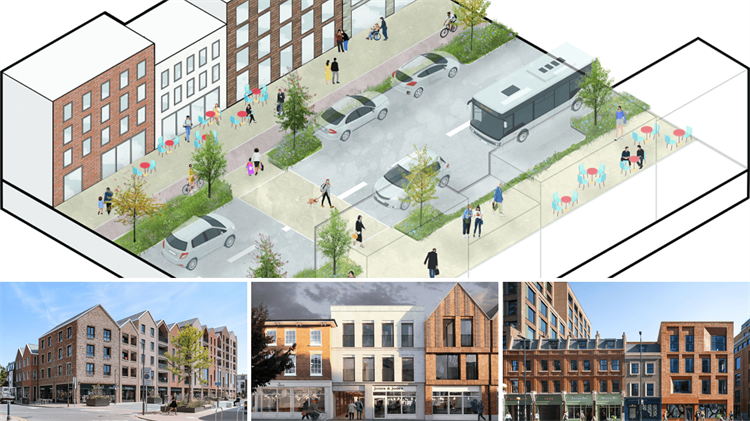
New purpose-built apartment blocks will replace poor-quality shared housing. They will offer modern 1- and 2-bedroom flats, including sheltered housing for people over 55.
Town houses
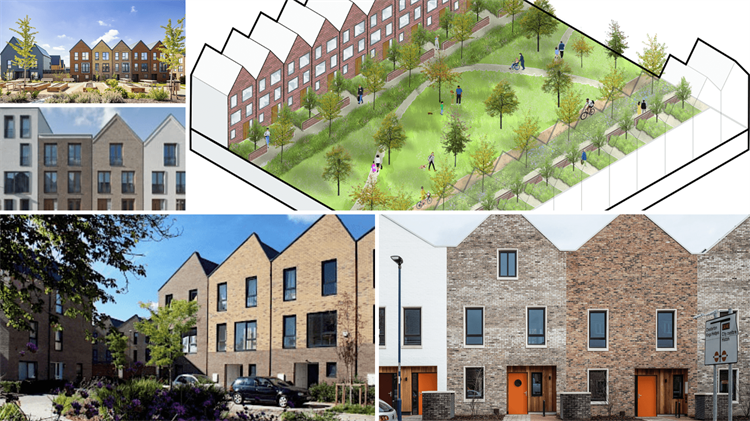
Larger town houses with 3 to 4 bedrooms and three floors will be built across the area.
Mews housing
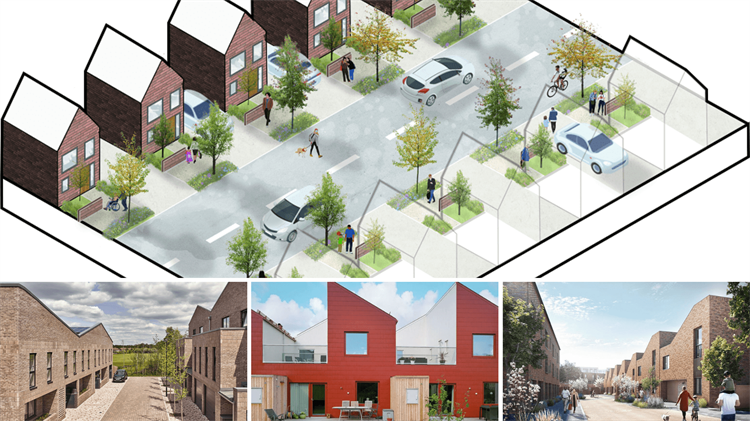
This new type of housing for the area will feature stylish homes in a pedestrian-friendly setting. These energy-efficient 2 to 3 bedroom homes will include terraces and parking underneath the buildings.
Benefits
- Energy efficiency and sustainability
- Comfort and lifestyle
- Health benefits
- Safety and security
- Community and accessibility
- Private garden space
4. Public spaces
Current public spaces
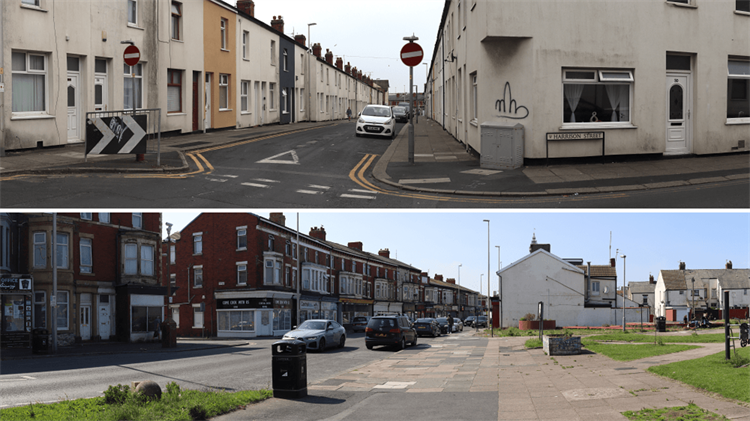
Public areas like footpaths, roads, and open spaces in the phase one area are very basic. They don’t reflect the area's history or help improve the look and feel of the neighbourhood.
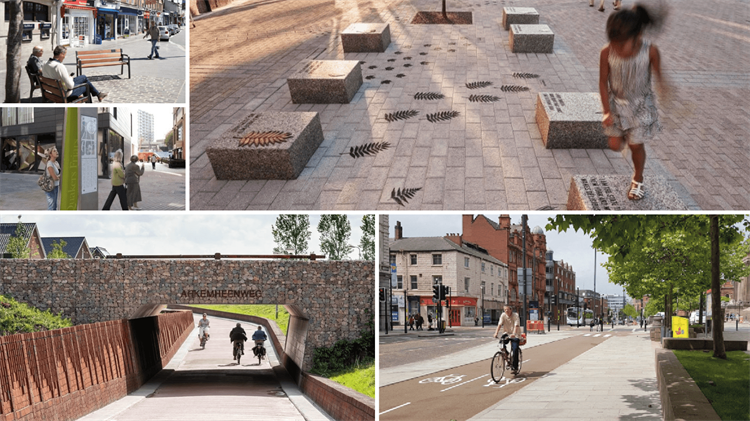
Streets are dull, with no trees, poor paving, and little seating or decoration. The current layout doesn’t encourage walking, cycling, or provide good spaces for play or community events.
What are the benefits of improvement?
- A more attractive neighbourhood that supports walking, cycling, and healthier lifestyles
- Designs that celebrate the area’s history and unique character
- New spaces for community events and social gatherings
- Safe and fun areas for children to play and enjoy
- A greener, more environmentally friendly town
- More visitors and support for local businesses
Design principles
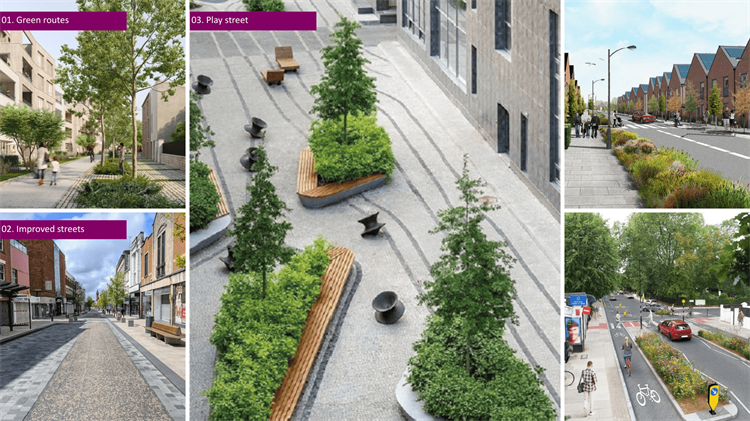
- Better links to the promenade, parks, local facilities, and nearby neighbourhoods using green, pleasant routes that encourage walking and cycling
- Improved streets to make it easier and safer for people to walk, helping reduce car use
- A new cycle lane along Central Drive
- Play areas and green spaces within easy walking distance for all residents
5. Open space and greening
Current situation
There’s very little green space in the phase one area. The small play area near Ibbison Court isn’t big enough for the local community and doesn’t offer much for children. There are very few trees or plants, and the green areas that do exist aren’t used much or designed to encourage activity.
Benefits of improvement
- Cleaner air and more wildlife
- Spaces for community events and exercise
- Better mental health and places to relax
- Higher property values and more visitors to local shops
- A more attractive and welcoming neighbourhood
Design principles
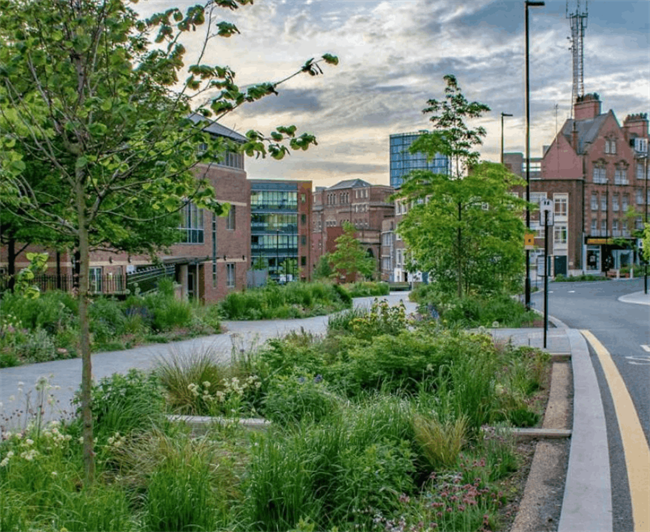
- Create green, tree-lined streets
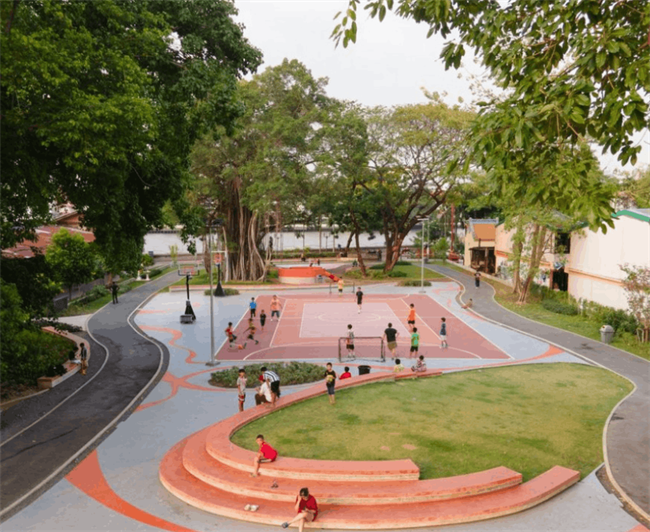
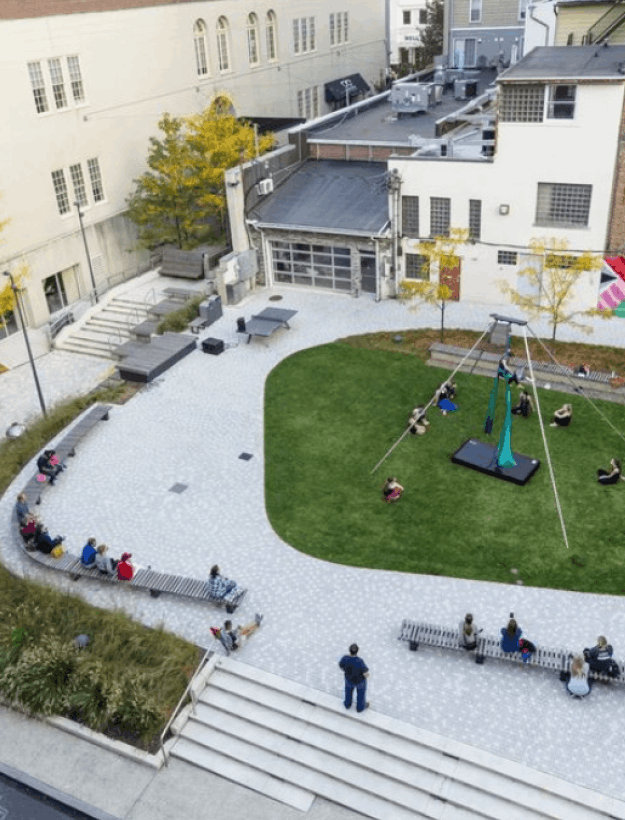
- Add spaces for relaxing, meeting others, and hosting events
- Provide more play areas for children and teenagers
- Increase plant and animal life
- Plant more trees throughout the area
6. Shops and community facilities
What it's like now
Blackpool Council’s planning policies identify part of Central Drive as a local centre, which means it’s meant to be a hub for shops, cafés, restaurants, and other businesses.
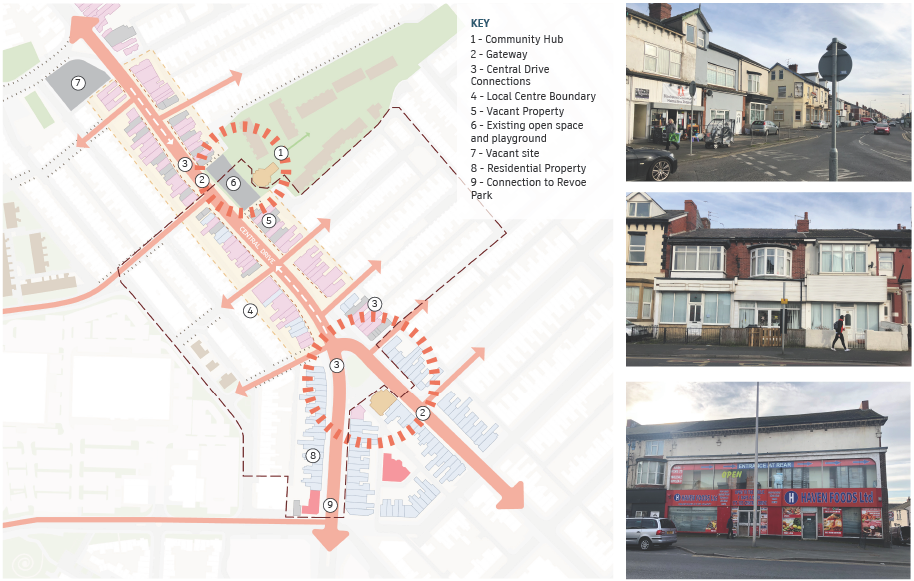
A recent survey of the ground-floor properties in this area found:
- Most businesses are in old houses that were changed into shops, not purpose-built commercial spaces
- About 30% of businesses serve local daily needs (like corner shops, hairdressers, and pharmacies)
- Another 30% attract customers from outside the area (like dog groomers or clothing stores)
- Around 30% of the shop spaces are empty
What it could look like
Blackpool Council wants to improve Central Drive so it better meets the needs of the growing community. With the planned property clearance, there’s a chance to:
- Build new, modern shop units
- Add trees and greenery
- Create places to sit and meet friends
- Make spaces for community events
- Improve pavements and crossings for pedestrians
Benefits
- New modern shop units
- More trees and planting
- More places to sit and meet new friends
- Places or spaces where local events or community gatherings can be held
- Improved pavements
- Improved pedestrian crossings
7. Access and connectivity
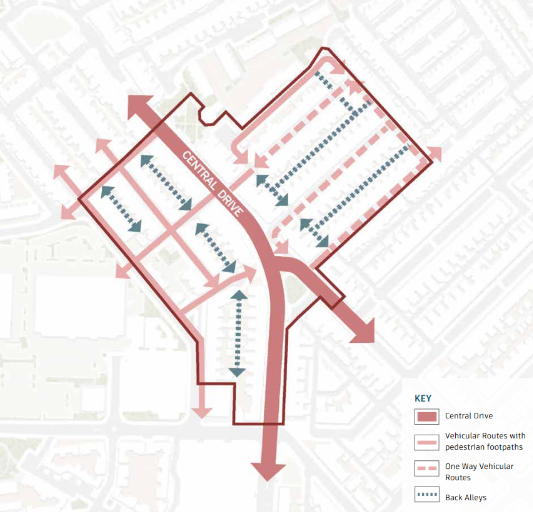
The area is close to great places like the beach, Stanley Park, the town centre, Revoe Park, and Blackpool Football Club. The plan is to make it easier to reach these by:
- Creating new, green walking and cycling paths
- Making it safer to cross Central Drive and Grasmere Road with raised crossings that slow down traffic
- Providing public parking near shops and community spaces, while still encouraging walking and cycling
Phase 1, and the wider Central Housing Regeneration Area, is close to many great facilities, including the Promenade and Beach, Stanley Park, Town Centre, the tramway, Revoe Park, and Blackpool Football Club - all within easy walking distance.
The plans aim to make these easier to reach by creating a network of green, high-quality footpaths and cycleways.
We are also improving pedestrian movement across Central Drive and Grasmere Road, using raised areas at key points to slow traffic and create safer crossings.
Public parking will be provided near shops and community facilities. While we encourage walking and cycling, we know that parking close to shops is important for local businesses.
Benefits of the scheme
- Easier access to open spaces, shops, and health services
- Encourage walking and cycling, improving mental and physical health
- Reduce traffic pollution and noise
- More people on the streets, making the area safer and supporting local businesses
- Improve the overall quality of life for residents
8 Your response and next steps
The planning application for this project is now live and the council welcomes all comments.
Blackpool Council has set out an expected timeline for the project, including key steps like applying for planning permission, buying properties, clearing old buildings, and starting construction of new homes.
Key dates
- Planning application submitted: spring 2026
- Planning decision expected: autumn 2026
- Property buying begins: Ongoing – council continue to buy properties voluntarily through negotiation
- Initial demolition starts: No sooner than autumn 2026